

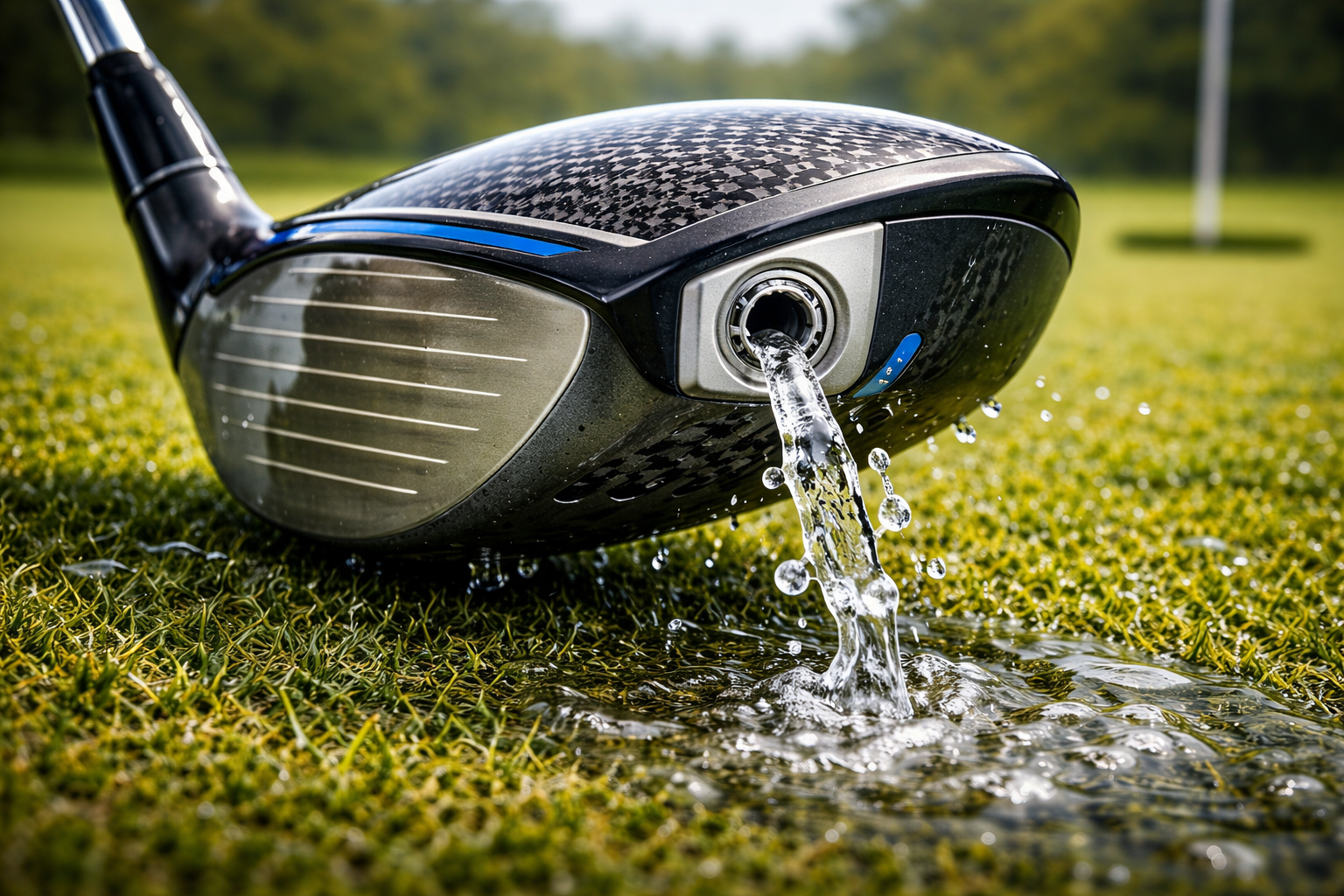
Golf equipment is built to handle outdoor conditions, but sometimes unusual situations happen during a round. One situation that occasionally surprises golfers is discovering that water has entered the head of their driver.
This can happen if a club briefly touches water while retrieving a ball, scooping something from a pond, or accidentally dipping the clubhead into water near the edge of a hazard.
If this happens, many golfers immediately wonder whether their driver could be damaged. Understanding how modern drivers are built and how water might affect them can help determine whether there is any real cause for concern.
How Water Can Enter a Driver Head
Modern drivers are designed as hollow metal structures. The head is typically constructed using lightweight metals such as titanium or composite materials to maximize distance while keeping the club easy to swing.
Although the head appears completely sealed, there are small areas where water could potentially enter. These include:
- Tiny gaps around adjustable weight ports
- Adjustment screw openings in adjustable drivers
- Vent holes used during manufacturing
If the clubhead is briefly submerged in water, a small amount of liquid may find its way inside through these openings.
Is Water Inside the Driver a Serious Problem?
In most situations, a small amount of water entering the driver head is not a major issue. Modern golf clubs are built with durable materials that are resistant to corrosion and moisture damage.
If only a small quantity of water enters the head and later drains out or evaporates, the club will usually continue performing normally.
However, there are a few things golfers should keep in mind.
Possible Effects of Water Inside the Clubhead
While brief exposure to water rarely causes serious damage, there are some potential effects worth understanding.
1. Temporary Weight Changes
If water remains inside the head, it could slightly change the overall weight of the club. Even a small amount of liquid may alter the swing feel.
Fortunately, this is usually temporary because water inside the head tends to evaporate or drain out over time.
2. Internal Moisture
In rare cases, moisture could remain trapped inside the club for longer periods. Although modern materials resist rust, prolonged moisture could potentially affect internal components if present for extended periods.
3. Unusual Sound During Impact
If water remains inside the driver head, some golfers notice a slight change in sound when striking the ball. The club may produce a duller tone until the moisture disappears.
What You Should Do If Water Gets Into Your Driver
If you suspect water has entered your driver head, there are a few simple steps you can take to ensure everything returns to normal.
Allow the Club to Dry
The easiest solution is simply allowing the club to dry naturally. Leaving the club in a warm, dry environment often allows any moisture inside to evaporate.
Check the Adjustment Port
If your driver has an adjustable hosel or removable weight, you may want to briefly check these areas. Sometimes opening the adjustment screw allows trapped moisture to escape.
Listen for Liquid Movement
Gently shaking the clubhead can reveal whether any liquid remains inside. If you hear movement or sloshing, it may take additional time for the moisture to dry completely.
Preventing Water From Entering the Club
Although occasional exposure to water is usually harmless, avoiding unnecessary contact with water hazards can help keep equipment in the best condition.
Simple habits can help prevent this situation:
- Avoid using your driver to retrieve balls from water
- Dry clubs after playing in wet conditions
- Store equipment in a dry location after rounds
These small steps help extend the lifespan of golf equipment.
How Durable Modern Drivers Are
Modern drivers are engineered to withstand significant impact forces and environmental conditions. Manufacturers test these clubs under extreme conditions to ensure durability.
Because of this, brief contact with water rarely causes serious structural damage.
Golf clubs are built for outdoor play, and manufacturers understand that equipment may occasionally encounter moisture, rain, or damp ground conditions.
When to Be Concerned
In most cases, water entering the driver head is harmless. However, if any of the following issues occur, it may be worth inspecting the club further:
- Persistent rattling sound inside the head
- Noticeable change in swing weight
- Visible damage around adjustment areas
If these symptoms appear, a golf equipment specialist or retailer can inspect the club to ensure everything remains in good condition.
Final Thoughts
Discovering that water entered your driver head can feel concerning at first, but in most situations it is not a serious problem. Modern drivers are designed to handle outdoor conditions and are built from materials that resist moisture damage.
Allowing the club to dry naturally and checking for any unusual sounds or weight changes is usually enough to confirm that everything is functioning properly.
With proper care and maintenance, golf equipment can continue performing reliably even after unexpected situations during a round.
Leave a Reply