

Putting is one of the most important parts of golf. While many players focus on improving their putting stroke, the equipment used on the green also plays a major role. Choosing the right putter can influence alignment, feel, and consistency.
Golfers often wonder what actually separates a high-quality putter from an average one. With so many options available, it can be difficult to understand which features truly make a difference.
This guide explains the key characteristics that make a putter effective and how those features can help golfers improve their performance on the green.
1. Balance and Stability
One of the most important characteristics of a good putter is balance. A well-balanced putter helps the clubhead remain stable during the stroke, reducing unwanted twisting at impact.
Many modern putters are designed with weight distributed around the perimeter of the head. This increases the club’s moment of inertia, which helps maintain stability even if the ball is struck slightly off-center.
A stable putter can improve consistency and make it easier for golfers to control the direction of their putts.
2. Alignment Features
Alignment is another critical factor that influences putting accuracy. Good putters often include visual aids that help players aim correctly.
These alignment features may include:
- Single alignment lines
- Multiple guide lines
- Contrasting colors on the top line
- High-contrast inserts
These visual cues help golfers position the clubface square to the target line before starting the stroke.
3. Feel and Feedback
Feel is a very personal aspect of putting. Some golfers prefer a soft feel at impact, while others prefer a firmer response.
The feel of a putter is influenced by the material used in the clubface. Common face materials include stainless steel, aluminum inserts, and polymer inserts.
Soft face inserts typically absorb more vibration, creating a smoother sensation when striking the ball. Firmer faces provide clearer feedback, allowing players to sense exactly how the ball was struck.
Finding a putter that provides comfortable feedback is important for developing confidence on the greens.
4. Head Shape and Design
Putter head shapes vary widely, and each design can influence the putting stroke.
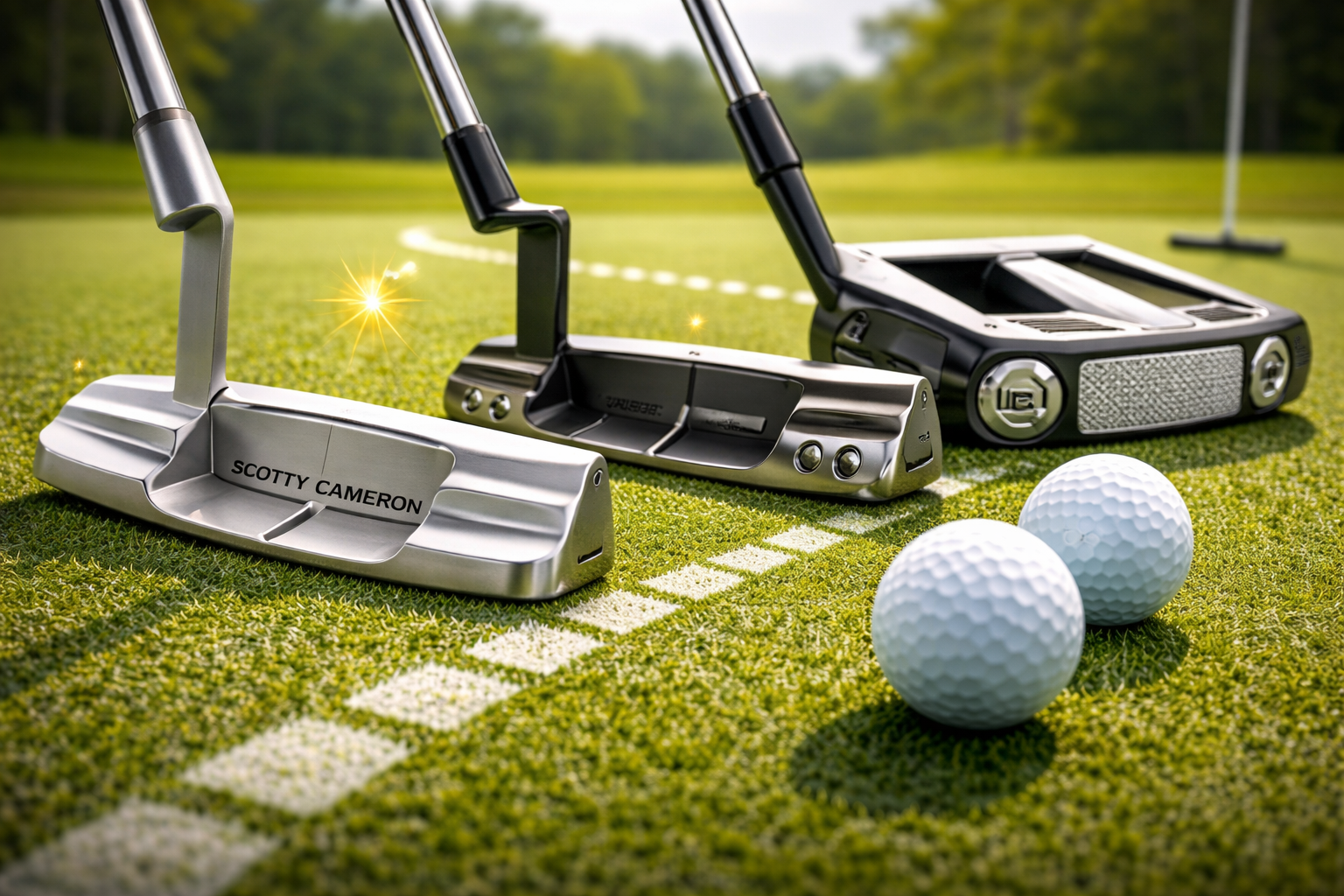
The two most common styles are blade putters and mallet putters.
Blade putters have a traditional design and are often preferred by players who use a putting stroke with more arc.
Mallet putters are larger and usually provide greater stability and forgiveness. These putters are popular among golfers who prefer a straight-back, straight-through stroke.
Choosing the right head shape often depends on personal preference and putting style.
5. Weight Distribution
Modern putter designs often focus heavily on weight distribution. Many putters use adjustable weights or heavier heads to improve control.
A heavier putter head can help smooth out the stroke and improve distance control, particularly on slower greens.
Proper weight balance also helps maintain the natural tempo of the putting motion.
6. Face Technology
Some putters incorporate advanced face technologies designed to improve consistency across the entire clubface.
Grooved faces, textured inserts, and milled surfaces are commonly used to influence how the ball rolls after impact.
These designs can help reduce skidding and promote a smoother roll toward the hole.
A consistent roll is essential for accurate putting, especially on longer putts.
7. Grip Comfort
The grip is often overlooked when evaluating a putter, but it plays an important role in stroke stability.
Larger grips have become increasingly popular because they help reduce wrist movement during the putting stroke. This can make the stroke more controlled and repeatable.
A comfortable grip allows golfers to maintain relaxed hands throughout the motion.
Does an Expensive Putter Perform Better?
Many golfers wonder whether premium putters provide significantly better performance than mid-range models.
Higher-priced putters often feature advanced manufacturing techniques, premium materials, and precise milling processes. These factors can improve durability and craftsmanship.
However, the most important factor is still how well the putter suits the individual golfer. A comfortable putter that matches a player’s stroke will usually perform better than a more expensive model that does not fit their style.
Choosing the Right Putter
When selecting a putter, golfers should focus on comfort, alignment confidence, and stroke compatibility.
Testing several putters on a practice green is one of the best ways to determine which design feels most natural.
Small differences in balance, grip size, and head shape can significantly influence how comfortable the putter feels during the stroke.
Final Thoughts
A good putter is not defined by price or brand alone. Instead, it is a combination of balance, alignment, feel, and design that works well for the individual golfer.
The right putter should inspire confidence and make it easier to produce a smooth, controlled stroke.
Ultimately, the best putter is the one that helps you consistently start the ball on the intended line and control the speed of each putt.
When these elements come together, putting becomes far more reliable and enjoyable on the course.
Leave a Reply